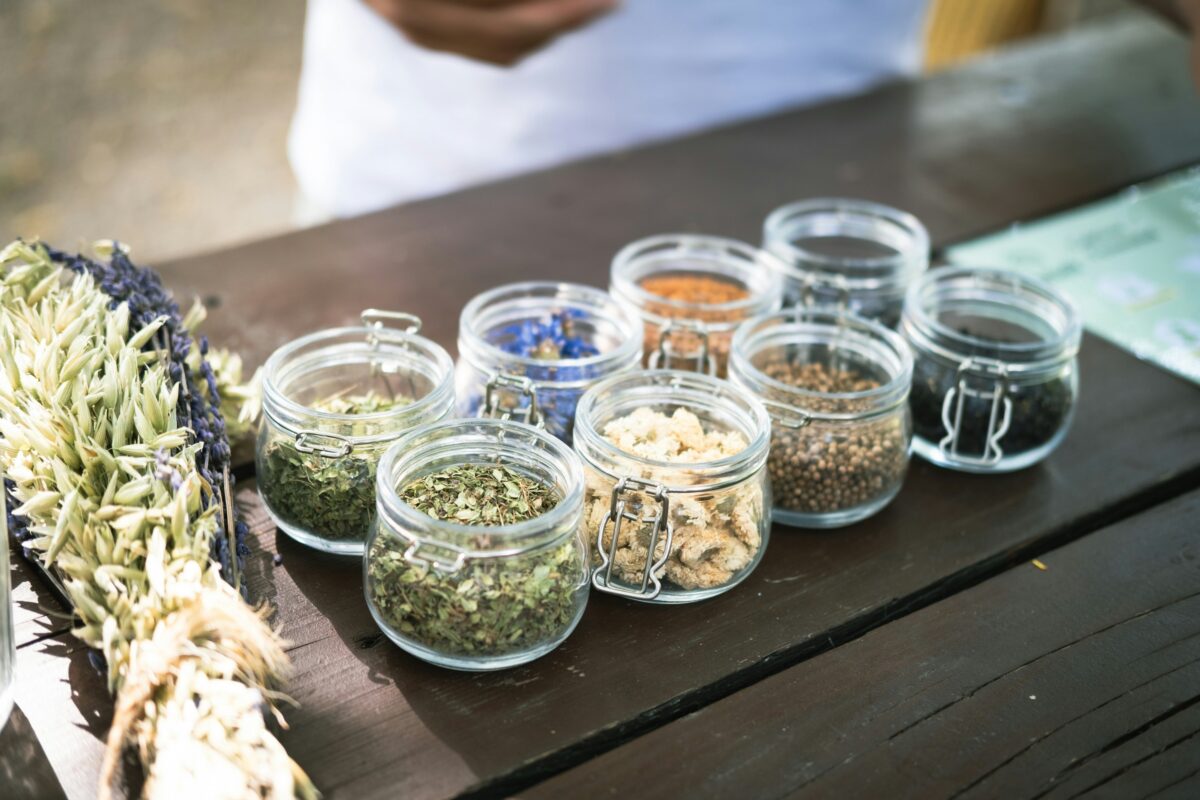
Ana grew up watching her abuela brew manzanilla tea for upset stomachs and rub arnica salve on sore knees.
By the time she was raising her own kids, she had her own shelf of herbal remedies: chamomile to help with sleep, ginger for nausea, and turmeric to stir into warm milk for achy joints. None of it ever came up at her clinic appointments. Nobody asked, and it never crossed her mind that her doctor might care about a simple cup of tea.
A lot of us are like Ana. People have been using herbal medicines for thousands of years, and you might be, too. Like Ana, you might be so familiar with these fixes that you never think of mentioning them at your doctor’s office.
So, should you? If so, what should you say, and what will your doctor think? To answer these questions, we turned to a leading expert on herbal medicines: Tieraona Low Dog, M.D.
Before earning her MD, Dr. Low Dog trained as a midwife and herbalist. So, she knows herbs. She spent more than 30 years working with plant medicines alongside conventional medical care. Eventually, she became so well known that U.S. President Bill Clinton appointed her to the White House Commission on Complementary and Alternative Policy. She also chaired various U.S. Pharmacopeia expert panels on dietary supplements and botanicals for 25 years. Dr. Low Dog has written several books on natural health, including Healthy at Home, Life Is Your Best Medicine, and the National Geographic Guide to Medicinal Herbs.
Here’s what she wants patients to know: what herbal medicine really is, what it can and can’t do, how to use it safely with regular care, and how to shop for it without wasting money.
What Counts as “Herbal Medicine,” Exactly?
Herbal medicine simply means using plants, or parts of plants, for health purposes. That can look like a cup of tea, a capsule, a tincture (an herb dissolved in alcohol or glycerin), a powder stirred into water, or a salve rubbed onto skin.
It’s easy to lump herbs in with vitamins and supplements since U.S. law files them all under the same “dietary supplement” umbrella. But Dr. Low Dog draws a clear line between them.
Vitamins and minerals are specific nutrients. If you don’t have enough of them, replacing them restores normal function. Herbs are different: a single plant can contain hundreds or even thousands of natural compounds. These compounds work with your body in complex ways.
| Going Deeper: Why isn’t herbal medicine regulated like prescription drugs?
“In the United States, vitamins, minerals, and herbal products are all regulated under the umbrella of dietary supplements,” Dr. Low Dog explains. That single category is where much of the confusion comes from. Herbal products don’t go through the same premarket approval process for effectiveness and safety as prescription drugs, which is a big part of why quality, potency and purity can vary so much from one brand to the next — and why reading the label carefully really matters (more on that below). |
What Can Herbal Medicines Actually Help With?
Many herbal medicines are supported by hundreds or even thousands of years of traditional use. More recently, a growing number have been studied in research laboratories in a similar fashion to prescription drugs. “I think many people are surprised to learn just how much research has been done on some plants,” Dr. Low Dog says.
Ginger is one of her favorites, since it’s both food and medicine. It has good evidence for relieving nausea, whether from morning sickness, motion sickness, or migraine.
Peppermint oil, taken in an enteric-coated capsule, can ease the symptoms of irritable bowel syndrome. Psyllium, a fiber source, has strong evidence for supporting digestive and heart health. Of course, herbal medicines can have side effects just like manufactured drugs. For example, one study showed that peppermint oil caused minty burps or heartburn more often than a placebo, or “dummy” pill.
But Dr. Low Dog pushes back on the idea of a single “best herb” for a given problem. “Herbal medicine isn’t about matching an herb to a symptom,” she says. “It’s about matching the right herb to the right person.”
Two people can have the same health condition, but very different health histories, medications, and needs. So, the right herb may be different for each of them.
Let Your Health Care Provider Know
This is the point Dr. Low Dog most wants patients to hear. Please tell your health care team about every herb, tea, supplement, and traditional or cultural remedy you use, even the ones that feel like ordinary kitchen items.
“Many people come from families and cultures where healing traditions have been passed down for generations,” she says. “These practices are often an important part of a person’s health, identity, and community. I believe they deserve to be acknowledged and discussed with the same respect we give any other aspect of healthcare.”
It is very important to talk to your care provider if you are taking herbal therapies and are pregnant, breastfeeding, have a serious medical condition, or are taking medications. They don’t need to know because herbs are dangerous – they need to know because herbs are powerful.
Herbs contain active compounds that can affect how you absorb and metabolize medications. For example, St. John’s wort, which some people take to support mood, can reduce the effectiveness of certain prescription and over-the-counter medications, including some allergy medicines. If you’re struggling with both depression and seasonal allergies, you want a treatment that addresses your mood without interfering with your allergy medication.
Plants like Oregon grape root or barberry are other examples. Both contain berberine, which is well known for interacting with medications. Dr. Low Dog also advises extra caution for anyone taking blood thinners or medications for diabetes, seizures, heart conditions, or cancer. The doses of these medications must stay within a narrow range – not too little, not too much. Herbs can affect this, so tell your doctor about any herbs or supplements you take.
“This does not mean herbs and medications cannot be used together,” says Dr. Low Dog. “They often can. But it does mean we need to be thoughtful.” You and your health care provider can use the NIH Clinical Digest on Herb-Drug Interactions as one way to check for concerns.
What If Your Doctor Doesn’t Know Much About Herbs?
Most health care professionals receive little training in herbal medicine, so a provider who says “I don’t know much about that one” is usually being honest, not dismissing you, Dr. Low Dog says.
Her advice is to be a conversation partner. Try asking something specific, like “Can you help me figure out if this is safe for me?” or “Are there any concerns about taking this with my other medications?”
You don’t need a provider who knows every herb. You need one who’s willing to listen, check the evidence, and think about what treatments work best for you.
If you want more guidance, there are professional herbalists, doctors, nurses, and physician assistants with specialized training in herbs and alternative medicines. You can check the websites of the American Academy of Naturopathic Physicians for naturopathic doctors and the American Herbalists Guild for registered herbalists.
Buying Smart: Where to Shop, and What to Look For
You can find excellent herbal products in pharmacies, health food stores, some clinics, and online, Dr. Low Dog says. Look at the label for the letters USP, cGMP, NSF International, or ConsumerLab.com. Learn more about buying herbs in this article from Memorial Sloan Kettering Cancer Center.
Look for companies that are transparent about what’s in the bottle. Dr. Low Dog suggests checking the label for:
- The herb’s common name, such as turmeric, and its Latin botanical name (such as Curcuma longa)
- Which part of the plant was used (root, leaf, flower)
- The amount per serving and clear directions for use
- Company contact information
Companies should also have a willingness to answer questions about where the herbs came from and how they are tested.
Be suspicious about anything that promises a miracle cure. “Good herbal medicine is not about hype,” Dr. Low Dog says. “It begins with correctly identified plants, careful cultivation, thoughtful preparation, and appropriate use.”
Remember that a higher price tag doesn’t necessarily mean the herb is of higher quality. Looking for the information above on the label and talking to a qualified herbalist, naturopathic doctor, integrative clinician, or pharmacist can help you find safe, good quality herbs you can also afford.
Growing your own herbs is another option Dr. Low Dog encourages, especially for milder, food-like herbs where dosing matters less. Easy, forgiving choices for a home garden or a sunny windowsill include:
- Peppermint, lemon balm, and lemon verbena
- Chamomile and calendula
- Thyme, rosemary, sage, and basil
For stronger medicinal herbs, where preparation and dosing matter more, she recommends buying from a reputable company rather than growing your own.
Herbal Medicine Doesn’t Have to Be Expensive
When you’re watching every dollar, Dr. Low Dog points out that some of the most useful herbs are already sitting in the kitchen.
- Cooking with ginger, garlic, rosemary, thyme, oregano, sage, cinnamon, and turmeric adds flavor to food. These herbs also give you many of the same beneficial plant compounds found in supplements. Make them part of your diet!
- A box of chamomile, peppermint, holy basil, or ginger tea is inexpensive and can genuinely help with digestion, nausea, stress, or sleep.
The greatest benefits come when herbs are combined with healthy habits: good nutrition, regular physical activity, restful sleep, managing our stress, and nurturing strong social connections. — Tieraona Low Dog, M.D.
Those habits, Dr. Low Dog adds, are good medicine, and often there are ways to access them free.
Where to Learn More
For patients, Dr. Low Dog points to the American Botanical Council, MedlinePlus, Herbs at a Glance, and the NIH Office of Dietary Supplements for reliable, easy-to-understand information.
She also suggests her own book, Healthy at Home, built around simple recipes and everyday uses for culinary herbs and spices, along with the National Geographic Guide to Medicinal Herbs, which she co-authored, for a closer look at specific medicinal plants.
Healthcare professionals can check Examine.com for evidence-based reviews of herbs and dietary supplements. Dr. Low Dog recommends the Natural Medicines database as one of the best evidence-based references available, along with HerbalGram, published by the American Botanical Council, for staying current on new research.
The Bottom Line
Herbal medicine isn’t new, and it isn’t going anywhere. It’s been part of how people care for each other for thousands of years, and it remains a meaningful part of health and identity for millions of families today, including many who never think of mentioning it at the clinic.
Used thoughtfully, herbs can be genuine allies in a person’s health. Used carelessly, or kept secret from the people managing your care, they can complicate things unnecessarily. The fix is not to abandon what your family has always done — it’s to bring it into the conversation.
“Plants have been our partners in healing since the beginning of human history,” Dr. Low Dog says. “The more we learn about them, and the more thoughtfully we use them, the more they can enrich our health and our lives.”
As for Ana, she now keeps a list on her phone of every tea, tincture, and home remedy she uses, and pulls it out at every appointment. Her doctor, it turns out, was glad to know.
This post was developed in partnership with Tieraona Low Dog, M.D., in collaboration with Integrative Medicine for the Underserved (IM4US.org). It is intended for general education and does not replace individualized medical advice. Always talk with your healthcare provider before starting or stopping any herbal remedy or supplement.
Photo by Timothé Durand on Unsplash