Group Appointments Are Changing How People Manage Chronic Illness and Loneliness
Rosa had lived with diabetes for three years, but she felt like she was living with it alone. Every few months she went to the clinic, waited, got 10 minutes with her doctor, and left after reviewing some test results. She always seemed to leave with a few questions still unanswered.
Her English was good enough to communicate, but the appointments moved fast. There was never time to explain what her life with diabetes was really like: the long shifts at work, the stress, the way her mother’s cooking never fit neatly into the meal plan on the handout.
Then her doctor mentioned the Monday morning group.
So, What Is a Group Appointment?
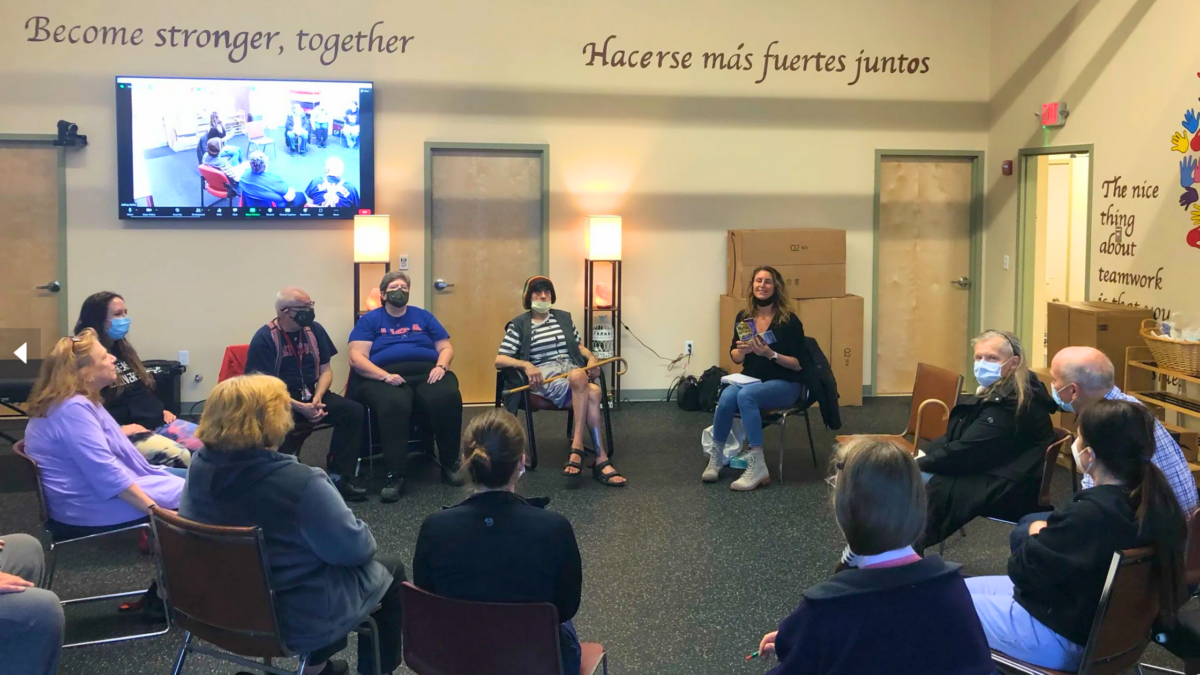
A group medical visit, or group appointment, brings a small group of patients with a similar condition together. The size of the group may vary, from as few as 4 to as many as around 15 people. Instead of a short 10-minute visit, a group appointment lasts an hour or two.
When you think “group,” you might think “support group.” And group appointments usually do include support, but they’re different from a support group like you might attend for divorce, grief, or something else.
Or you might think of a class, like nutrition or childbirth. It’s true that there are groups offering health education, where a health care professional teaches you what to do or expect in a certain situation.
But a group appointment is different from that, too. It’s a medical appointment, but not the rushed one-on-one that Rosa was used to. It can include time with your doctor, time to talk with other patients, and often treatment, like yoga, acupuncture, or massage. You might also have the option to come in, talk with your doctor for a few minutes, get an OK for your prescription refill and then leave. This can work well if you don’t have much time.
Dr. Jeff Geller is a family doctor from Lawrence, Massachusetts. He’s spent his career developing these types of group medical appointments for everyone from kids who need to eat healthy to grandmothers (and occasionally men, too) with bone loss and bone weakness, or osteoporosis.
Dr. Geller describes a group appointment this way: “You come to the clinic at your scheduled time, we have a variety of activities, and you can choose what you do. You can talk to me, talk with a nurse, do yoga, talk with other patients, visit our healing garden or whatever else works for you.”
At his clinic, the Integrated Center for Group Medical Visits (ICGMV), Dr. Geller runs about 35 group appointments each week. Some are for adults and some are for children. His practice is also the #1 training center for this type of appointment in the United States. Today, many more places offer group appointments than when he started practicing 30 years ago. They include top medical centers and groups like Kaiser, Yale Health, and the Cleveland Clinic.¹
What Happens During a Group Visit?
The Monday morning diabetes group at Dr. Geller’s clinic was where Rosa went. This group runs in both English and Spanish, so everyone can communicate. Though not all group medical visits will follow this format, at ICGMV, people check in with the doctor one at a time. He goes over lab test results, refills prescriptions and talks about any individual concerns. Then the group comes together.
Dr. Geller opens with what he calls a “rose and a thorn.” What is one thing that’s going well with your diabetes care? What is one thing you wish was going better?
Rosa had never been asked that in a doctor’s office before.
What followed surprised her more. A woman across the room described the same struggle with late-night snacking that Rosa had. Someone else said that walking after dinner had helped his numbers more than anything his doctor had prescribed. A third patient asked the question Rosa had been wanting to ask for months: could stress alone make blood sugar go up?
Rosa realized she wasn’t alone. Other people had the same problems and shared what worked for them. The doctor also talked about nutrition, exercise, and what the latest research showed was most helpful.
Rosa was concerned she might not have personal time with the doctor, but she did. And the person who checked her in told her insurance would cover it, just like a regular appointment.
But wait! What About Privacy?
This is the question everyone asks first.
Group visits follow the same privacy rules as regular appointments. Patients sign agreements to keep each other’s information private. In practice, doctors have learned that privacy concerns fade quickly once people experience a well-run group.
“If a group is well facilitated, the worries about privacy go away,” says Dr. Geller. “People have advice for one another. They share, and they find they are not alone.”
He continues, “What people worry will be awkward, hearing others discuss their health problems, often turns out to be the most helpful part. Knowing that someone else has the same fears, the same questions, the same struggles with medication: that turns out to be part of the medicine.”
Is This Right for Every Culture?
You might wonder whether group visits feel more comfortable for some people than others, depending on where you are from.
Dr. Geller has thought about this a lot, and his view has changed over time. “I used to think so,” he says. “But every culture has groups. Healing in groups is not new. It may have been forgotten in our current American culture, which can be more about the individual, but groups have been going on forever.”
What varies across cultures, he has found, is not comfort with groups themselves but comfort with sharing certain things in a group setting. And that has much more to do with how well the group is run than with where anyone is from. A skilled facilitator creates a space where sharing feels safe.
For Rosa, whose family back in the Dominican Republic turned to one another in tough times, the Monday group felt less like a medical appointment and more like something she already knew how to do.
Research supports this. One program designed for Spanish-speaking patients found meaningful improvements in pain, fatigue, and depression, with participants saying that receiving care in their own language was rare and valuable.²
The Science: Why Being Heard Matters
Dr. Geller’s own research, published in 1999, found something that surprised the medical world at the time. Loneliness predicted how often people would visit the emergency room much more accurately than how sick they were. People who scored above average on loneliness visited the ER 60 percent more often than other people, regardless of their physical health.³
His research also found that Spanish-speaking patients had significantly higher loneliness scores than others. This pointed to feeling isolated because of culture and language, a health problem that standard medical care was not addressing.
“Knowing that you’re not alone is part of healing,” Dr. Geller says. “A patient may listen to another patient going through the same problem more than they’ll listen to a provider.”
Dr. Geller does caution that much of the research on group appointments is for the “education” type, where people are in more of a class setting than a “camp” with activities. But for people managing diabetes, one large review study found that blood sugar levels got better, and that the benefits increased, the longer people stayed in the group.⁵
People who go to group visits also tend to ask more questions. In a study at a major eye hospital in India, people in group appointments asked one-third more questions every minute than people seen one-on-one. The group setting increased, rather than decreased, how involved they were at the appointment.⁶
Who Are Group Visits For?
Group visits are most common in primary care. This is your family doctor’s office, where you get general care for conditions like diabetes, high blood pressure or cholesterol, headaches or managing your weight.
They also work for bone loss and weakness (osteoporosis), mental health, cancer care, prenatal care, and other specialty situations.
Group visits tend to be most helpful for people who feel the current system has let them down. These are the people like Rosa, who can’t get their questions answered in 10 minutes. They are people like her neighbor Demetrius, who can’t afford extra services like nutrition counseling or massage. They are people like Alberto, who has lupus but doesn’t know anyone else with the disease. Before he started going to group appointments, he felt alone with his diagnosis.
That said, Dr. Geller notes that his patients span a wide range. “About 20 percent are more affluent,” he says. “They might own their own homes, while most people in the group live in apartments. They may have different worries, like whether their kid will get into college, while other people are worried about losing their job. But talking about health and sharing tips and support “helps everyone,” Dr. Geller says. “We are learning to be together, to understand that health problems affect everyone.”
What Does the Research Show?
The results from well-run group visits are hard to ignore.
A large randomized controlled trial followed low-income, racially diverse adults with chronic pain. After nine weeks, the people going to group visits made 68 percent fewer emergency room visits than those in standard care. After about five months, they used 58 percent less pain medication.7 Their pain did not necessarily go away. But they were coping differently. They felt less alone.
For prenatal care, group appointments have been shown to lower the risk of premature babies.8 This is especially helpful for Black women, who have higher childbirth risks with regular prenatal care.
For diabetes, the evidence shows that the longer patients participate in group appointments the better they do. Every year someone stays in a group visit program was linked to an additional meaningful drop in blood sugar levels.⁵
These findings matter for health care costs too. Many studies show that people who go to group appointments use the emergency room a lot less – one-third to two-thirds less often – than people who get regular care. They also go to the hospital less and need less care from specialists.9
Are Group Appointments Covered by Insurance?
Yes, and many people are surprised to learn this.
Group medical visits are billed the same way as regular individual appointments. Each patient still gets personal time with the doctor, so the visit qualifies as a standard medical appointment. Medicare, Medicaid, and most private insurers cover them.
If you use a direct primary care practice, where you pay a monthly fee instead of billing insurance, group visits are often included in that fee.
What Makes a Good Group Visit?
Not all group visits are the same.
Dr. Geller’s approach, called the “empowerment model,” is built around patient choice rather than lectures. Instead of telling patients what to do, the facilitator helps the group discover what they need. Patients often help shape the agenda.
“Giving information is only useful to very empowered people who already have the means,” he says. “A group appointment is not all about education. It’s about what people are asking.”
One week a group might ask to try meditation. Another week, they want to check in quickly, get their refills, and go home. Both are right answers. No one has to do anything he or she doesn’t feel comfortable doing.
Can Group Visits Be Done Online?
Yes. Dr. Geller started offering virtual group visits several years ago, before COVID-19. He expects that most practices will eventually offer group medical visits virtually, as these can make it easier for patients in rural areas or who have trouble getting to the clinic to participate.
Virtual visits make it easier when it’s challenging to get to the clinic, or just to get around at all. A virtual visit is easier if you live far from the clinic or have a demanding work schedule. In one program for cancer patients during the pandemic, 9 out of 10 people came to their group visits. And almost 9 out of 10 rated the experience “excellent.”¹0
Where Can You Find a Group Visit?
Start by asking your current provider whether they offer group appointments or know of practices that do.
You can also visit the Integrated Center for Group Medical Visits. Community health centers, which serve patients regardless of ability to pay, are among the most active users of the model. Find a community health center.
This September, Dr. Geller’s clinic is holding its annual conference on September 18, 2026. It will bring together patients, providers, and community members who support group appointments. Register here.
The Bottom Line
The standard 15-minute doctor’s appointment was designed to help doctors see patients quickly. It was not designed to help patients get better.
Group appointments are different. They bring time, community, and connection back into health care. And the research shows that those things genuinely help people heal.
Rosa still goes to the Monday morning group. Her blood sugar levels have come down. But when she talks about the group, she does not talk about her numbers first. She talks about finally understanding her own condition, and about not being the only one figuring it out.
“Knowing that you’re not alone,” says Dr. Geller, “is part of healing.”
References
- Jaber R, Braksmajer A, Trilling JS. Group visits: a qualitative review of current research. J Am Board Fam Med. 2006;19(3):276-290.
- Cornelio-Flores O, et al. The Latino Integrative Medical Group Visit as a Model for Pain Reduction in Underserved Spanish Speakers. J Altern Complement Med. 2018;24(2):125-131.
- Geller J, Janson P, McGovern E, Valdini A. Loneliness as a predictor of hospital emergency department use. J Fam Pract. 1999;48(10):801-804.
- Tang, Mei Yee et al. Effectiveness of shared medical appointments delivered in primary care for improving health outcomes in patients with long-term conditions: a systematic review and meta-analysis of 29 randomised controlled trials. BMJ Open. 2024.
- Housden L, Wong ST, Dawes M. Effectiveness of group medical visits for improving diabetes care: a systematic review and meta-analysis. CMAJ. 2013;185(13):E635-E644.
- Buell, R. W., Ramdas, K., & Sonmez, N. Can Shared Service Delivery Increase Customer Engagement? A Study of Shared Medical Appointments. SSRN Electronic 2020
- Gardiner P, et al. Effectiveness of integrative medicine group visits in chronic pain and depressive symptoms: a randomized controlled trial. PLOS One. 2019;14(12):e0225540.
- Ickovics JR, et al. Group prenatal care and perinatal outcomes: a randomized controlled trial. Obstet Gynecol. 2007;110(2):330-339.
- Wan W, et al. Costs and health care utilization analysis of medical group visits for adults with type 2 diabetes in community health centers. Med Care. 2023;61(12):866-871.
- Mishra KK, et al. Mindfulness-based group medical visits: strategies to improve equitable access and inclusion for diverse patients in cancer treatment. Glob Adv Integr Med Health. 2024.
Genevieve Walker, PhD is a freelance writer and editor specializing in patient education, plain language, and consumer health content. She is the editor of the AMWA Journal’s health communication section and teaches patient education at the University of Chicago.